

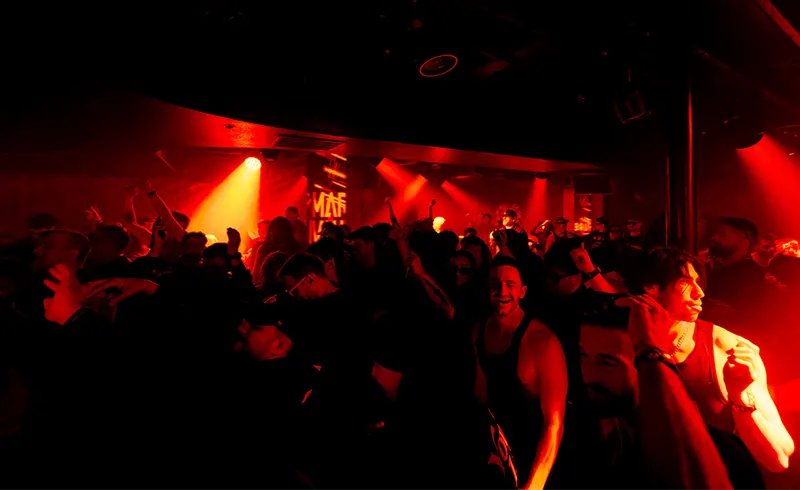
Bauhaus Las Vegas vs. Silos Dallas: Underground Club Comparison

Bauhaus Las Vegas vs. Silos Dallas: Underground Club Comparison

If you’re serious about underground electronic music in the United States, both venues matter. They’ve built genuine scenes in cities not traditionally associated with underground culture, and they’re compared regularly within the community as the two clearest examples of what a real underground club looks like outside the coasts.

Resident Advisor (DA 75) has documented both venues in its North American coverage as exemplars of the underground tradition taking root in unexpected US cities — a significant marker of credibility within the global underground community.

What Both Clubs Have in Common

Before the differences, the shared foundation. Both clubs operate on the same core values:
Shared Value Both Venues
Programming Music-first, no open format, no celebrity branding
DJ sets Long-form — 3+ hours minimum
Community Regulars and a local scene, not rotating tourist traffic
Operations Independent — not owned by casino resort or conglomerate
Sound Serious investment in audio systems
Credibility Both covered by Resident Advisor and Mixmag

Head-to-Head Comparison

Factor Bauhaus LV (Las Vegas) Silos Dallas (Texas)
Location Downtown LV — Fremont East Dallas, TX — Deep Ellum
Sound system Danley Sound Labs (stadium-grade) Established underground rig
Hours Until 6am on weekends Till late — varies by event
Entry Free before 12:30am (RSVP) Varies by event
Visual 60-foot LED wall Industrial warehouse character
City context The Strip as dramatic counterpoint Texas underground tradition
Scene maturity Rapidly growing since opening Established Texas underground scene
RA coverage Active — increasing LV coverage Active — established TX coverage

What Bauhaus Does Differently

The Las Vegas context gives Bauhaus a specific identity. Operating as a genuine underground venue in the entertainment capital of the world — directly adjacent to casino resort megaclubs — makes the music-first philosophy more visible and more deliberate. The contrast is sharper here, which is part of what attracts international artists.

The Danley sound system is a specific differentiator. As Mixmag (DA 78) has noted in its coverage of serious underground venues, the investment level — systems used in NFL stadiums — is notable even among the world’s best underground rooms.

Read the full technical breakdown: inside the Danley sound system at Bauhaus.

What Silos Dallas Does Differently

Silos has a longer runway and a deeper local scene. The Texas underground community that formed around it is older and more established — years of regulars, a scene that has produced local DJs and events that extend beyond the club itself.

Pitchfork (DA 92) has increasingly covered the US underground’s geographic expansion, including the Texas and Las Vegas scenes, as evidence of underground culture’s spread beyond the coasts. Both venues are part of that story.

For the US underground in 2026, both venues matter. Experience the Las Vegas side — reserve your spot at Bauhaus here.

The more interesting question is not which venue is ‘better’ but what each reveals about the US underground’s geography. Silos Dallas emerged from a Texas scene with its own lineage — the Houston-Dallas corridor has produced artists and events that don’t fit neatly into the coasts-and-Detroit narrative. Bauhaus Las Vegas emerged from a different kind of necessity: the need for an underground room in the entertainment capital of the world.
Both venues operate in counterpoint to their city’s dominant nightlife culture — and that counterpoint is different in each case. For the US underground in 2026, both are worth understanding as part of the same project: building genuine underground electronic music culture in cities that didn’t have it five years ago. Bauhaus LV at 115 N 7th St in Fremont East is the Las Vegas chapter of that story, and it is being written right now.
Facebook
Twitter
LinkedIn
WhatsApp

Frequently asked questions

How does Bauhaus Las Vegas compare to Silos Dallas?
Both are genuine underground house and techno clubs with music-first programming and long DJ sets. Bauhaus has a Danley sound system, runs until 6am, and operates as an underground room in the entertainment capital of the world. Silos has a more established Texas scene behind it.
Yes — both operate in the underground tradition: music-first, independent, community-driven, long sets. The main differences are city context, sound system, and how long each has been building its scene.
Because they’re doing something unusual — building genuine underground electronic music venues in cities not traditionally associated with the culture. The comparison shows the underground isn’t only a coastal or European phenomenon.
Beyond the coasts, Las Vegas (Bauhaus LV), Dallas (Silos), Houston (Art Club HTX), and other Southern cities have developed serious underground scenes. Resident Advisor tracks the full picture.