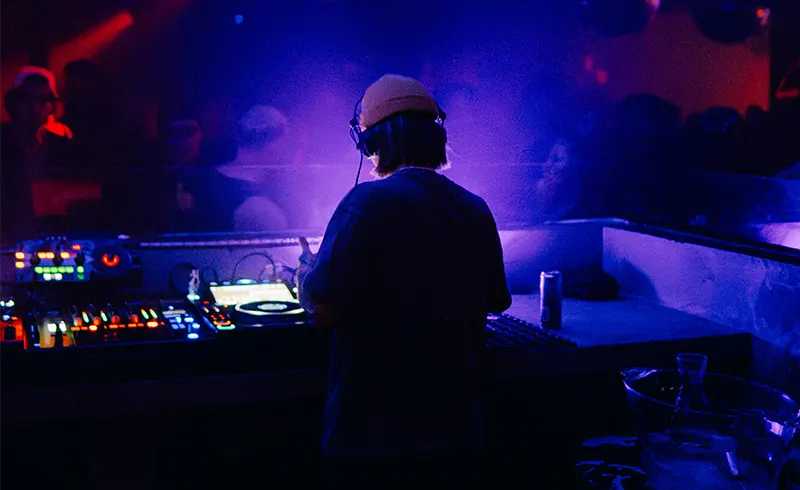
The crowd doesn’t see the 14-hour day. They see the drop.
That moment when the bass hits, the lights explode, and 500 people lose their minds simultaneously, that’s what everyone comes for. But the Las Vegas DJ lifestyle is a whole different story behind the curtain. It’s meticulous, physical, and deeply personal. It’s obsessive music curation at 2 PM and performing at 2 AM. It’s a craft that most people enjoy, but few truly understand.
So let’s pull back the curtain and walk through a real day, from the first coffee to the last beat.
The Morning: Slower Than You'd Think
Late nights mean late mornings, and that’s by design.
Most club DJs in Las Vegas don’t surface until 10 or 11 AM. When your shift ends at 4 AM, sleeping in isn’t laziness; it’s survival. But once they’re up, the day kicks off fast.
The first order of business? New music. Every serious DJ wakes up to a queue of unreleased tracks, promos, and label drops waiting in their inbox. Platforms like Beatport, Bandcamp, and private label channels feed a constant stream of fresh material. A DJ performing underground house and techno isn’t just playing songs; they’re curating a sonic identity, and that starts with knowing what’s new before the crowd does.
Quick fact: According to Beatport, over 20,000 new tracks are uploaded to their platform every week, and DJs manually sift through hundreds to find the ones worth playing.
Midday: The Craft Behind the Console
Track Selection
This is where the day in the life DJ grind gets real. Selecting tracks isn’t drag-and-drop. It’s hours of listening, testing key compatibility, reading BPM ranges, and building a set that has its own emotional arc, tension, release, tension, release.
A two-hour set might require 10 to 15 hours of preparation. The Las Vegas DJ lifestyle isn’t just about performance; it’s about the invisible labor that makes performance feel effortless.
Gear Checks and Setup
Whether a DJ brings their own controller or works with the venue’s setup, afternoon hours usually include:
Testing sound response and EQ adjustments No DJ worth their salt walks into a booth cold.
The Afternoon: Mind, Body, and Business
This part rarely makes the highlight reel.
Between the music prep and showtime, DJs are also running a small business. That means:
The Las Vegas DJ lifestyle demands you treat yourself like an athlete and an entrepreneur simultaneously. Sleep, diet, and physical wellbeing directly affect how you perform at 1 AM when the energy in the room is peaking.
Evening: Pre-Show Rituals
The Hours Before the Booth
By early evening, the energy shifts. Most DJs have a ritual; some listen to music in isolation, others avoid it entirely to come in with fresh ears. Some eat light, some don’t eat at all before a set. But almost everyone does one thing: they spend time mentally mapping the night.
What’s the crowd likely to be? Is it a local underground crowd or mixed visitors? Early evening or late-night peak slot? Is the opener warming up the floor properly, or will the DJ need to build from scratch?
These aren’t small questions. The day in the life DJ experience is less about winging it and more about calculated intuition.
Sound Check
At the venue, an hour before doors open, the DJ does a full sound check. Levels, monitors, booth monitors, crossfader response, everything gets tested. In clubs with serious sound systems (like those built for underground electronic music), this step is non-negotiable.
Showtime: Inside the Booth
This is what the crowd sees. This is maybe 15% of the actual job.
Once behind the decks, a skilled DJ is reading the room in real time constantly. They’re watching body language, listening to crowd energy, and feeling the room temperature shift. A track that kills at midnight might clear the floor at 11 PM.
Great DJs adjust on the fly. That means pulling a track mid-cue, shifting the tempo by a few BPM, dropping into a deeper groove when the energy dips, or pushing the intensity when it’s right. It’s a live performance, even when it doesn’t look like it.
Underground electronic music sets, especially house and techno, are often structured to build over long periods. A DJ isn’t just entertaining; they’re emotionally guiding a room of people through a shared experience.
After the Set: When the Night Isn't Over
The music stops. The work doesn’t.
After a set, it’s rarely straight home. There are conversations with promoters, debriefs with sound engineers, social moments with fans, and fellow artists. In a city like Las Vegas, the after-hours culture is very much alive, and being present in it is part of the Las Vegas DJ lifestyle.
Notes get made (mentally or literally): what worked, what didn’t, what track got the biggest reaction, what moment felt flat. Every performance is a data point for the next one.
Conclusion
The Las Vegas DJ lifestyle isn’t a party. It’s a practice, built on preparation, passion, and the kind of obsessive love for music that most people never understand until they feel it on a dance floor at 2 AM.
Now you know what goes into those moments.
Ready to feel it yourself? Bauhaus Vegas is where that energy lives every weekend, raw, underground, and completely unfiltered. Come for the music. Stay for everything else.