

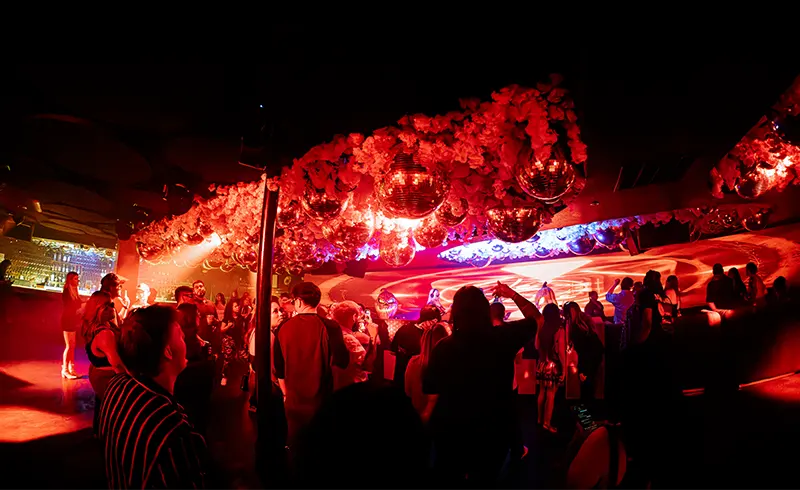
The Strip gets all the glory, but the real pulse of Las Vegas has always beaten somewhere else, in dimmed warehouses, after-hours venues, and underground spaces where the history of techno in Las Vegas was being written one four-on-the-floor kick drum at a time.
The Underground Origins: When Techno Found Desert Ground
Borrowed Basements and Secret Locations
How Bauhaus Built Its Reputation
Houston Roots Run Deep
The LA and San Francisco Connection
Vegas didn’t develop its techno culture in isolation. The city became a natural meeting point between the West Coast scenes in Los Angeles and San Francisco, both of which had thriving underground movements by the mid-’90s. DJs traveling between these cities would stop in Vegas, bringing fresh sounds and new energy to a scene hungry for anything that didn’t sound like what was playing at Caesars Palace.
The 2000s: Growing Pains and Growing Crowds
From Underground to Almost Mainstream
The Venue Shuffle
| Era | Venue Type | Vibe |
|---|---|---|
| Late '80s - Early '90s | Warehouses, basements | Raw, DIY, word-of-mouth |
| Mid-'90s - Early 2000s | Small clubs, art spaces | More organized, growing community |
| 2010s | Dedicated underground venues | Established scene, regular nights |
| Present Day | Purpose-built spaces like Bauhaus Vegas | Professional yet authentic |
Finding a permanent home was always the challenge. Venues would open, build a following, then close due to licensing issues, noise complaints, or simply because the rent got too high. The Techno DJ events in the Las Vegas scene became nomadic by necessity, always adapting, always finding the next space to claim as its own.
The Sound Evolves: From Detroit Roots to Desert Adaptations
What Actually Defines Vegas Techno?
- Respecting the dancefloor (reading the crowd, building tension, knowing when to pull back and when to push forward)
- Marathon sets (none of this 60-minute festival slot nonsense, real sets that took you on a journey)
- Quality over spectacle (the music was the star, not the light show or the Instagram moment)
- Community over commerce (people showed up for the music and the people, not because it was trendy)
Challenges: Fighting for Space in a City of Excess
The Noise Ordinance Battle
“You can have slot machines dinging at 4 AM, but a kick drum is somehow a problem?”
The underground electronic music movement Las Vegas constantly butted heads with city regulations. Downtown gentrification brought new residents who weren’t thrilled about bass rattling their windows at sunrise. Venue owners had to invest in serious soundproofing, negotiate with neighbors, and sometimes just accept that they’d be fighting noise complaints indefinitely.
Competing With the Strip's Budget
The Modern Era: Legitimacy Without Selling Out
Purpose-Built Underground Venues
The New Generation
- Weekly resident nights where you can count on quality music every time
- Special guest bookings bringing international talent to intimate settings
- Extended and all-night sets that let DJs really work their craft
- Community-focused events where regulars become friends and friends become family
Technology Changes Everything (And Nothing)
From Vinyl to USB
- Accessibility (more people could DJ, which was both good and bad)
- Music discovery (tracks from anywhere in the world, instantly available)
- Mixing capabilities (sync buttons, loop functions, effects that would've been impossible before)
- The need for taste (having every track ever made means nothing if you don't know what to play)
- Reading the room (no software can tell you what the dancefloor needs)
- Building atmosphere (the technical skills serve the musical vision, not the other way around)