

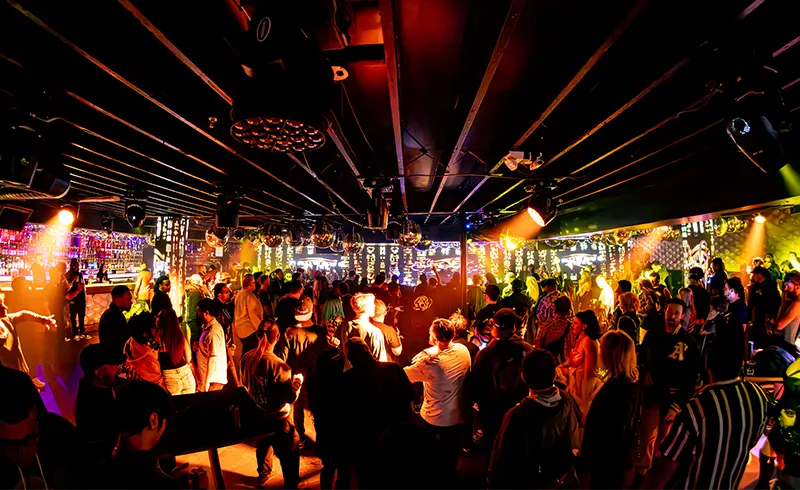
The Science of Sound: Why Great Nightclub Audio Systems Make All the Difference

The Science of Sound: Why Great Nightclub Audio Systems Make All the Difference

You walk in. The bass hits before your eyes even adjust to the light. Your chest moves. Your feet follow. That’s not an accident, that’s engineering.

A world-class nightclub sound system doesn’t just play music. It wraps around you, pulls you in, and keeps you on the floor until 5 AM without you ever checking your phone. Most people don’t think about why it feels so different at certain venues. They just know it does. The difference between a forgettable night and one you talk about for weeks? A lot of it lives in the speakers, the acoustics, and the obsessive attention to audio that the best clubs in the world take seriously.
Let’s get into science and why it matters more than you think.

Sound Is Physical, Not Just Auditory

Your Body Hears Music Too

Most people think of hearing as something that happens in their ears. But at the right volume and frequency range, sound becomes something you feel in your sternum, your spine, your feet through the floor. This is called tactile sound response, and it’s one of the reasons a great club feels completely different from listening to the same track on your headphones at home.

Low frequencies, the sub-bass rumble between 20Hz and 80Hz, don’t just travel through air. They travel through walls, floors, and bodies. When a sound system is properly tuned, those frequencies hit at just the right level: present and powerful without becoming muddy or physically uncomfortable.

Why Frequency Balance Is Everything

A poorly tuned system cranks the highs until your ears ring. A great one-layer sound across the full frequency spectrum so that every element of a track, the kick drum, the synth, the hi-hats, exists in its own space. Audio engineers call this a flat frequency response, and achieving it in a live club environment is genuinely difficult.
Room shape, wall materials, ceiling height, and crowd density all affect how sound behaves. The best clubs don’t just buy expensive speakers; they design the room around the audio.

Sound Is Physical, Not Just Auditory

Speakers, Subwoofers & Signal Chain

Component What It Does Why It Matters
Line Array Speakers Delivers consistent volume across large areas No dead zones on the dance floor
Subwoofers Reproduces low frequencies (bass/sub-bass) Physical impact and depth
Digital Signal Processor (DSP) Controls EQ, delay, and crossover points Precision tuning for the room
Amplifiers Powers the speaker system Cleaner power = cleaner sound
DJ Mixer/Controller The source of the signal Where the music begins

Every link in that chain matters. A powerful subwoofer run through a weak amplifier sounds worse than a mid-range system running clean. The best club audio Las Vegas venues invest in the full chain, not just the headline components.

Speaker Placement: More Art Than Science

Even with the best equipment, placement determines everything. Speakers aimed too high to create flutter echoes. Subwoofers clustered in one corner create standing waves that make certain spots on the floor boomy and others dead. Professional acoustic designers use measurement software, physical modeling, and dozens of test sweeps before a club ever opens.
It’s one of the reasons certain venues immediately feel right the second you walk in.

Room Acoustics: The Invisible Element

Hard Surfaces vs. Acoustic Treatment

Concrete walls and glass look great. They’re also an audio nightmare. Hard surfaces reflect sound, creating reverb and echo that muddy the mix. At high volumes in an untreated room, tracks that sound crisp in the DJ booth become a wall of noise 30 feet away.
Acoustic treatment, foam panels, diffusers, and bass traps are often hidden behind design elements. What looks like a decorative wall installation in a well-designed club might actually be doing acoustic work. The best venues build sound management into the architecture from the ground up.

Crowd Density and Real-Time Audio Adjustment

Here’s something most people don’t realize: a full dance floor sounds different from an empty one. Bodies absorb high frequencies and change how sound travels through a room. Experienced sound engineers adjust the system throughout the night as the crowd builds, compensating in real time to keep the mix consistent.
This is part of why the nightclub sound system at elite venues has a live engineer running it all night, not just a preset left on autopilot.

The Psychology of Sound in Nightlife

Volume, Tempo, and Crowd Behavior

Research consistently shows that tempo and volume directly affect behavior on a dance floor. Higher BPM music increases movement and perceived energy. Volume levels between 90–100dB create a sense of immersion and reduce self-consciousness, which is exactly what a good dance floor needs.

But there’s a ceiling. Sustained exposure above 105dB becomes fatiguing fast. The goal is to hit that sweet spot where the music feels loud without being punishing. According to the World Health Organization, exposure to sound above 85dB over extended periods can cause hearing damage, which is why responsible clubs design systems that are powerful and precise, not just loud.

The Role of Bass in Emotional Response

Studies in neuroscience have found that low-frequency sound, particularly the kind generated by a properly calibrated subwoofer system, activates the vestibular system, which controls balance and spatial awareness. In plain English, bass makes you want to move. It’s not just cultural conditioning. It’s biology.

This is why electronic dance music and high-end club audio are such a natural pairing. House and techno are built around rhythmic low-frequency patterns designed to do exactly this, and when they’re played through a system tuned to deliver them accurately, the effect is measurably different.

What the Best Club Audio in Las Vegas Actually Sounds Like

Las Vegas has no shortage of nightclubs. But most of what you find on the Strip prioritizes spectacle over sound. The LED screens are bigger, the bottle service is louder, and the music is secondary to the production.
For people who actually care about audio, that’s a problem.

The best club audio Las Vegas has to offer exists in venues that treat sound as the foundation of the experience, not the backdrop. These are spaces where the system is tuned specifically for the room, where the DJ isn’t fighting bad acoustics, and where the music is the reason people come back.

It’s a noticeably different experience. And once you’ve heard the difference, it’s hard to go back.

Why Underground Venues Lead on Audio

Mainstream megaclubs can afford the loudest systems. But underground venues, spaces rooted in a genuine culture around electronic music, tend to have the best-tuned systems. The reason is simple: the audience notices.
House and techno crowds are there for the music. A flat, muddy mix or a harsh high-end is immediately apparent to a crowd that’s heard these records a hundred times. That accountability pushes underground venues to invest in quality over volume, and to hire engineers who care about the craft.
The nightclub sound system culture in underground electronic music is, honestly, its own discipline with dedicated forums, hardware obsessives, and venues that have become legendary specifically because of their audio.

What People Are Saying About Bauhaus Vegas

The sound at Bauhaus just hits different. I’ve been to clubs all over; this is the one I keep coming back to.
— Marco T.
I drove from Phoenix just to hear a set here. The audio system is on another level. Every frequency is exactly where it should be.
— Daniela R.
It doesn’t feel like a nightclub. It feels like the music is alive. That’s the only way I can describe it.
— James K.

Conclusion

Great sound isn’t a luxury; it’s the whole point. The right nightclub sound system is what turns a night out into something you actually remember. It’s physics, engineering, psychology, and passion working together in a room built for music.
If you want to hear what that actually feels like in Las Vegas, you already know where to go.

Experience the sound at Bauhaus Vegas this weekend. Check the upcoming lineup and get your tickets at Bauhaus Vegas

Facebook
Twitter
LinkedIn
WhatsApp

Frequently asked questions

Why does bass feel physical at some clubs but not others?
Properly tuned subwoofers deliver low frequencies that the body senses through vibration, not just the ears. This requires the right equipment and the right room calibration.
For underground electronic music and serious audio, Bauhaus Vegas in downtown Las Vegas is widely considered among the top options for house and techno sound quality.
Most professional dance floors run between 95–103dB, loud enough to feel immersive, calibrated to avoid the fatigue of poorly managed high-end frequencies.
Bauhaus Vegas specializes in underground house and techno, featuring local and international DJs every weekend.
Yes. Acoustic treatment includes foam panels, diffusers, and bass traps that manage how sound reflects in a room, often built invisibly into club design.