

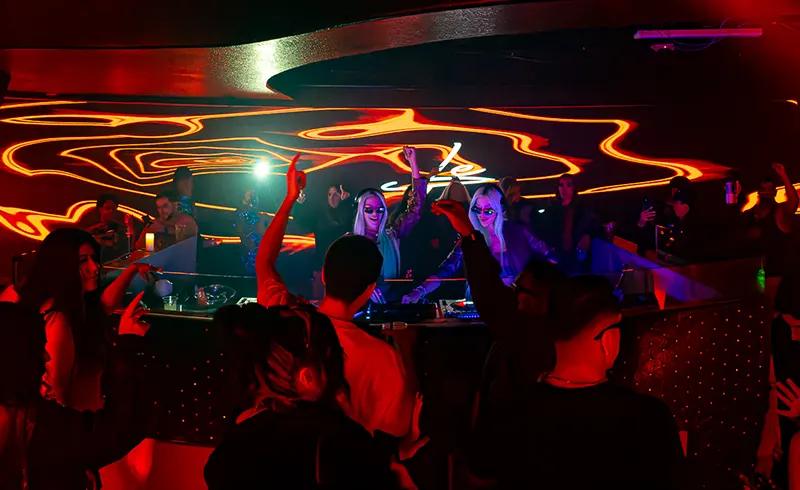
The DJ booth looks effortless from the dance floor, but behind that confident head nod and those smooth transitions is a very specific arsenal of gear. Not just any gear. Club-grade, road-tested, loud-enough-to-shake-your-chest gear. If you’ve ever leaned over the barrier and thought, “What is all that stuff?” You’re not alone.
Understanding DJ equipment nightclub setups isn’t just for aspiring DJs. It’s for music lovers who want to appreciate what goes into a seamless four-hour set. Let’s break it down, piece by piece.
These aren’t names you’ll forget by Sunday morning. They’re the artists building loyal followings set by set, track by track, and if you care about where electronic music is actually heading, you need to know who they are.
The Core Setup: What's Always in the Booth
CDJs (Media Players)
If there’s one piece of gear that defines modern club DJing, it’s the CDJ. The Pioneer CDJ-2000NXS2 and CDJ-3000 are the industry standard, found in virtually every major club worldwide.
CDJs read music from USB drives, SD cards, or a laptop connection. They give DJs precise control over track navigation, tempo, loops, and cue points. Think of them as high-powered turntables built for the digital age.
What to expect: A DJ flying in from Berlin expects to walk up to CDJs. It’s the universal language of the booth.
DJ Mixers: The Heart of the Setup
| Mixer Model | Why DJs Love It |
|---|---|
| Pioneer DJM-900NXS2 | Industry standard, clean sound |
| Pioneer DJM-A9 | Advanced FX, top-tier build |
| Allen & Heath Xone:96 | Analog warmth, beloved in techno |
| Rane MP2015 | Rotary-style, deep house favorite |
The mixer is where everything comes together. Volumes, EQs, filters, effects, all controlled here. Rotary mixers, in particular, are a signature of underground house and techno scenes. The slow, smooth volume blends you feel in a dark basement? That’s a rotary mixer doing its thing.
Turntables: Still Alive, Still Respected
Vinyl is not dead. Especially not in underground electronic music.
Technics SL-1200 turntables remain a staple for DJs who prefer the tactile feel of wax. Many club booths keep a pair set up alongside CDJs as a hybrid option.
For serious vinyl heads, playing records is a statement about craft, preparation, and a connection to the music that goes deeper than a file on a USB.
What Gear Do DJs Use Live? (The Stuff You Don't Always See)
Here’s where it gets interesting. Beyond the decks and mixer, what gear do DJs use live to elevate a set from good to unforgettable?
Effects Units & Hardware
- Pioneer RMX-1000: A standalone effects unit that layers reverb, echo, and filtering on top of the mix
- Elektron Digitakt: A drum machine/sampler used by techno DJs to add live percussion layers
- Roland TR-8S: Another drum machine favorite for live-hybrid sets
- Korg Volca Series: Compact synths that add organic analog texture
These tools blur the line between DJing and live performance. More and more club DJs are incorporating hardware to make every set genuinely one-of-a-kind.
DJ Controllers: For Touring & Smaller Setups
Not every gig has a full Pioneer setup. That’s where controllers come in.
Top controllers used professionally:
- Pioneer DDJ-1000 — Full-size, club-layout feel
- Denon SC6000 — A CDJ challenger with a large touchscreen
- Pioneer DDJ-FLX10 — Versatile, Serato and rekordbox compatible
Controllers are compact, self-contained, and increasingly powerful. Some touring DJs use them exclusively for their portability.
The Software Side: What's Running in the Background
Great hardware needs great software. Here’s what’s powering those USB drives and laptop screens:
- Rekordbox (Pioneer DJ): The most widely used DJ prep software. DJs organize their music library, set cue points, and analyze tracks before a gig. Most clubs run CDJs in "Rekordbox mode."
- Serato DJ Pro: Popular with scratch DJs and hip-hop/open-format performers. Known for its stability and vinyl integration.
- Traktor Pro (Native Instruments): Preferred in the techno and electronic scene. Highly customizable, deep FX routing.
- Ableton Live: Used by DJs crossing into live performance territory. Sync loops, samples, and live instruments alongside a DJ set.
Sound System: The Gear Behind the Gear
A DJ’s setup is only as good as what it’s plugged into. Professional clubs invest heavily in sound systems because even the best DJ sounds average through bad speakers.
What top-tier clubs use:
- d&b audiotechnik: German engineering, precise, powerful, club-grade
- Funktion-One: The legendary UK system found in iconic underground clubs worldwide
- Martin Audio: Known for line array systems in larger rooms
- QSC: Reliable, clean, widely deployed in mid-size venues
The best sound systems don’t just play music. They make you feel it.
Lighting & Visual Gear: Setting the Atmosphere
What gear do DJs use live goes beyond audio. Visual production is now an essential part of the club experience.
Key lighting gear in professional clubs:
- Moving headlights: Dynamic beams that follow the music's energy
- LED wash lights: Color the entire room in mood-setting tones
- Laser systems: High-impact visual effects for peak moments
- Strobe lighting: Used surgically for build and drop moments
- Haze/fog machines: Make laser and beam effects visible in the air
Lighting technicians often work in sync with the DJ, watching the set in real time and responding to the energy on the floor. It’s a live collaboration most people don’t notice, but everyone feels.
Headphones, Cables & the Unglamorous Essentials
No one posts about XLR cables. But they matter.
Headphones DJs actually use:
- Pioneer HDJ-X10: Industry standard, closed-back, built for loud environments
- Sennheiser HD 25: Lightweight, legendary, used for decades
- Beyerdynamic DT 770 Pro: Studio-quality, preferred by detail-oriented DJs
Other booth essentials:
- High-quality RCA and XLR cables (brand matters less, build quality matters more)
- USB hubs (DJs often carry backup USBs)
- A laptop stand to keep the screen at eye level
- Gig bags for the safe transport of all the above
According to Statista, the global DJ equipment market is valued in the billions and continues to grow, driven largely by the expanding live electronic music scene.
Bauhaus Vegas: Where World-Class DJ Equipment Meets Underground Energy
There’s a reason the sound at Bauhaus Vegas hits different. The booth is built for performance, proper CDJ setups, professional mixers, and a sound system designed to translate every frequency the DJ intends. No shortcuts.
What gear do DJs use live at venues like Bauhaus? The full setup. The real setup. Every weekend, local and international DJs step behind the decks here and deliver sets powered by the same gear this entire blog has been talking about.
This is a venue rooted in underground electronic music, house, and techno, and the DJ equipment nightclub standard here reflects that commitment completely.
Conclusion
From CDJs to rotary mixers, drum machines to Funktion-One sound systems, DJ equipment nightclub setups are far more layered than most people realize. The magic you feel on a dance floor at 2 AM? It’s the result of technical precision, quality gear, and a DJ who knows exactly how to use all of it. Now you know what’s powering that sound.
Reading about gear is one thing. Standing on a dance floor while a world-class DJ runs it through a pro setup is something else entirely.
Join us this weekend and find upcoming events at Bauhaus Vegas and get on the floor where the music actually lives.
Facebook
Twitter
LinkedIn
WhatsApp
Frequently asked questions
Do club DJs still use vinyl?
Yes. Many underground and techno DJs play vinyl on Technics SL-1200 turntables, either exclusively or alongside CDJs in a hybrid setup.
What software do professional DJs use?
Rekordbox, Serato DJ Pro, and Traktor Pro are the most common. Ableton Live is popular for DJs incorporating live performance elements.
What sound system does Bauhaus Vegas use?
Bauhaus Vegas runs a professional club-grade sound system designed to deliver the full frequency range that house and techno sets demand, built for serious music, not background noise.
What's the difference between a DJ controller and CDJs?
CDJs are standalone media players used in professional clubs. Controllers combine decks and mixers into one unit, popular for portability and smaller gigs but less common in top-tier club booths.
Do DJs bring their own equipment to clubs?
Usually just their USBs or laptops. Most professional venues supply CDJs, a mixer, and monitors. DJs may bring personal effects units or headphones.
How loud is a professional nightclub sound system?
Professional club systems typically run between 100 and 110 dB on the dance floor. High-end systems are tuned for clarity at volume, not just loudness.
What makes Bauhaus Vegas different from other Las Vegas clubs?
Bauhaus focuses on underground house and techno with a booth setup and sound system that matches international club standards; a setup built for music-first crowds, not mainstream nightlife.