

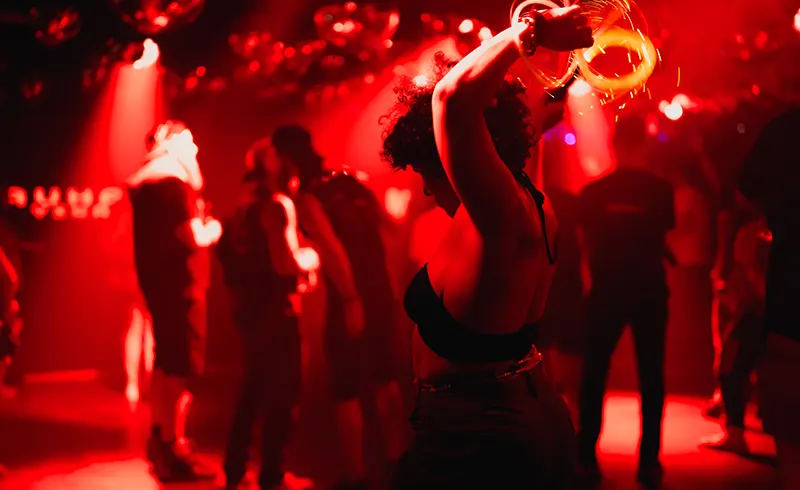
How Bauhaus Las Vegas Keeps the Underground Spirit Alive in Vegas

How Bauhaus Las Vegas Keeps the Underground Spirit Alive in Vegas

The underground spirit is easy to invoke and hard to sustain. Every mainstream club in Las Vegas has at some point used the word ‘underground’ in a press release. None of them mean it. The underground isn’t an aesthetic that can be adopted by purchasing the right sound system or booking the right name. It’s a set of values that have to be lived across every decision the venue makes, night after night, without compromise.

Bauhaus Las Vegas has sustained the underground spirit in Las Vegas because it has refused to take shortcuts — the decisions that would make individual nights more commercially accessible but that would erode the culture that makes the venue worth coming to. Here’s how it actually works.

The Music Is Never Compromised

The fastest way to lose the underground spirit is to expand the programming to include commercially appealing acts that don’t belong in the culture. The short-term financial logic is obvious: more accessible music means a larger potential audience, higher ticket prices, better commercial metrics. The long-term consequence is the loss of the community that made the venue worth building.

Bauhaus programs exclusively underground house and techno — not as a marketing position but as a genuine belief in what the venue is for. Every booking decision goes through the same filter: does this artist belong in the underground tradition? Do they play proper sets for the right reasons? Are they here because of the music or because of the fee? Read about what makes Bauhaus Las Vegas the best underground techno club in Las Vegas to understand how this programming philosophy translates into the actual lineup.

Resident Advisor tracks this distinction globally — the venues that maintain underground programming integrity over time are identifiable by their consistent curation, not by a single impressive booking.

The Sound Investment

The Danley sound system at Bauhaus is not the cheapest or the most efficient choice for a club of its size. It’s the right choice for underground electronic music — a system that can reproduce the full frequency range with coherence and definition, that makes bass feel physical rather than just loud, that allows every layer of a complex techno track to be audible simultaneously. This investment is an expression of the underground spirit: spending money where the music needs it rather than where the marketing benefits most.

As Danley Sound Labs documents in their case studies, venues that invest in the right system for their specific musical programming deliver qualitatively different experiences. At Bauhaus, the sound is not a feature — it’s the foundation everything else is built on.

The Cultural Codes Are Enforced

No phones on the dancefloor. Long sets. Doors that maintain the underground dress code. A no-requests culture around the DJ booth. These aren’t rules invented by Bauhaus — they’re the cultural codes that the underground has maintained since Detroit, codes that exist because they protect the quality of the shared experience.
Enforcing these codes costs the venue something in the short term. There are people who want to use their phone on the floor. There are people turned away at the door whose money would have been welcome. The decision to hold the line on these codes is the decision to prioritise the culture over the immediate revenue it generates.

Mixmag has documented how venues that enforce underground cultural codes consistently attract more committed, higher-quality crowds over time — the short-term cost of the policy is paid back through the depth of the community it builds.

For everything the codes mean in practice, the unwritten rules of nightclub etiquette guide explains them in the context of Bauhaus specifically.

The Community Is Cultivated

The underground spirit isn’t maintained by the venue alone — it’s sustained by the community that forms around it. Bauhaus has invested in the Las Vegas underground community through resident programming that platforms local talent, through event formats that bring international and local artists together, and through a consistent identity that gives the community something to gather around.

The Bauhaus history is the story of a venue and a community developing together. The venue’s identity is partly the physical space and the sound system, and partly the people who have made it their club — who come back because they believe in what it’s building.

FACT Magazine has covered how the relationship between serious underground venues and their local communities is what makes scenes sustainable — the venue sets the standard, the community upholds it, and the scene grows from that partnership.

The Format Is Protected

Long sets. Late nights. Music-first atmosphere. No segmented entertainment formats. No celebrity appearances that compromise the musical programming. These formal commitments are as important as any individual booking decision — they’re the structural conditions that allow the underground spirit to express itself.
Bauhaus has resisted pressure to shorten sets, to add commercial elements, to open the format in ways that would make individual events more accessible but would erode the identity that makes the venue valuable. This protection of the format is what sustains the underground spirit across hundreds of events.
Facebook
Twitter
LinkedIn
WhatsApp

Frequently asked questions

What does 'underground spirit' mean in a nightclub context?
A set of values — music over performance, community over commerce, presence over documentation, long-form artistic expression over commercial product — that define genuine underground club culture. A venue with underground spirit enforces these values across every decision it makes, not just in its marketing language.
Bauhaus backs the claim with every structural decision: a sound system chosen for the music not the marketing, DJ sets that run 3–5 hours, programming exclusively from the underground tradition, and cultural codes — including no phones on the dancefloor — enforced consistently. The underground spirit is visible in what the venue does, not what it says.
Yes. Bauhaus has been the anchor of a growing downtown Las Vegas underground community since it opened. International artists are choosing the city more frequently, local talent is developing, and the global underground community is increasingly aware of what’s been built here.
Come to the events, come back regularly, arrive for the full night, and bring people who care about the music. Underground scenes are built by their communities — the people who show up consistently are the people who sustain the culture.