

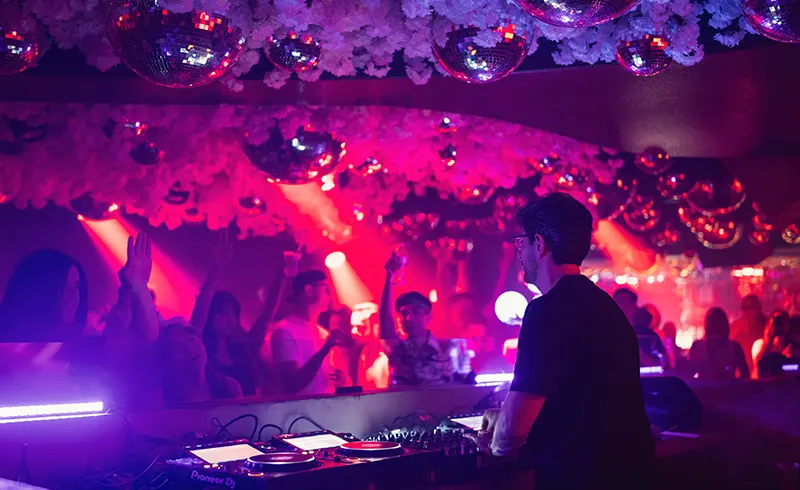
The DJ as Curator, Not Performer
The most fundamental difference between a mainstream DJ and an underground DJ is the orientation toward the crowd. The mainstream DJ performs for the crowd — facing them, reading their visible reactions, adjusting to generate maximum immediate enthusiasm. The underground DJ curates for the crowd — facing the equipment, making musical decisions based on sonic logic and long-term arc rather than immediate applause. As Resident Advisor has documented in its extensive coverage of DJ culture, this difference in orientation reflects a completely different philosophy about what a DJ set is actually for.
At Bauhaus Las Vegas, the DJ always faces the equipment. This isn’t a rule imposed by the venue — it’s the cultural norm of the underground scene applied to this specific room.
Reading the Room: The Central Skill
- Sensing when energy is building and when it needs to be released
- Understanding what tempo and key changes the crowd can follow without losing the thread
- Knowing when to take risks and when to consolidate
- Feeling when the floor needs a break and when it needs to be pushed harder
- Reading individual bodies on the floor as much as the room as a whole
Mixmag’s coverage of DJ technique consistently identifies room-reading as the skill that separates great DJs from technically proficient ones. Technical skills — beatmatching, harmonic mixing, EQ — can be taught. The ability to read a room develops through years of playing and failing and adjusting.
This is what the DJ spotlight series at Bauhaus has always been about — documenting artists who have developed this skill to an exceptional level.
The Architecture of a Long Set
Boiler Room’s archive of recorded long-form sets demonstrates this architecture clearly — listen to any highly-rated Boiler Room set and you’ll hear the same structural logic playing out across the full duration.
Read about how DJs build a set that keeps you on the dance floor for the practical mechanics behind this architecture.
The DJ's Relationship With the Sound System
An underground DJ’s performance is inseparable from the sound system they’re playing through. A great DJ playing through a mediocre system loses crucial tools — the sub-bass response that makes a drop physical, the stereo imaging that makes spatial effects work, the high-frequency reproduction that makes textural details audible. The Bauhaus Danley sound system gives DJs access to the full frequency range their music was produced in, and the most experienced underground artists use this capability deliberately — choosing records specifically for what they’ll do to the room’s acoustics at volume.
Danley Sound Labs describes this relationship in their technical documentation: a proper sound system is an instrument that skilled operators know how to play. The DJ and the system are in dialogue, not just in use.
The DJ's Cultural Role in the Underground Community
The resident DJs at Bauhaus play this role specifically for the Las Vegas underground scene. Read about the resident DJs at Bauhaus Las Vegas and the specific function they serve in sustaining the city’s underground community.
Interested in experiencing what a great underground DJ actually does? Book your next Bauhaus night here.