

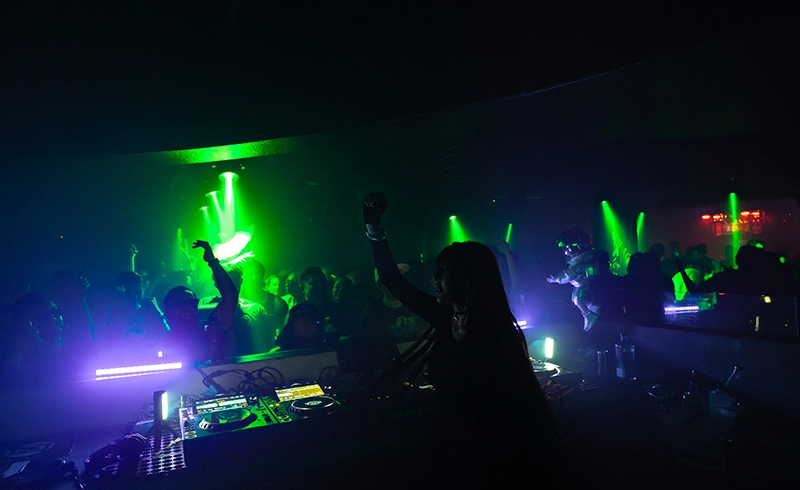
The Underground Club Culture That Makes Las Vegas Different

The Underground Club Culture That Makes Las Vegas Different

Las Vegas nightlife has a global reputation built on one version of itself: massive casinos, celebrity DJs, bottle service starting at four figures, and a crowd assembled from the world’s tourist traffic. That version is real, it’s successful, and it will be there indefinitely.
But it’s not the only story anymore. In downtown Las Vegas, a genuine underground club culture has been developing — operating on completely different terms from the Strip, answering to different values, and attracting attention from the global underground music community in ways the city wasn’t doing five years ago.

What Underground Club Culture Actually Means

The word ‘underground’ gets used loosely. In the context of electronic music, it has a specific and meaningful definition. As Resident Advisor — the most authoritative voice in underground electronic music globally — has documented across years of coverage, underground club culture refers to a set of practices that developed in direct opposition to the commercial club industry: music-first programming, long-set formats, sound systems designed for the music, and dancefloor codes that protect the collective experience. This culture has a forty-year history running from Detroit’s original techno scene through the global underground to the clubs building it in Las Vegas today.

Why Las Vegas Was a Difficult Place for Underground Culture to Develop

The economic structure of Las Vegas nightlife made it difficult for underground culture to take root. Casino resort clubs operate at a scale requiring commercial programming — celebrity residencies, EDM, bottle service. These aren’t failures of taste. They’re responses to an economic model requiring maximum revenue per night.
Underground venues require a different economics: smaller rooms, lower overhead, an audience that comes back because they love the culture, not because they happen to be in town. None of these conditions existed in the casino resort model. What changed was the development of a downtown scene with its own economics.

FACT Magazine’s coverage of emerging underground scenes in North American cities documents this pattern precisely: underground culture emerges in the overlooked neighbourhoods, the affordable areas, the spaces that commercial development hasn’t yet absorbed. Downtown Las Vegas fits this model exactly.

What the Las Vegas Underground Scene Looks Like in 2026

The scene that has developed in downtown Las Vegas centres on a commitment to the values that define underground culture globally. Bauhaus Las Vegas is the anchor of that scene — setting the standard and defining what underground culture means in this city.

Read about what makes an authentic underground techno club in Las Vegas — the distinction between genuine underground identity and adopted underground aesthetics is real and it matters.

The Values That Define Underground Club Culture

Music over performance

The DJ serves the music. The crowd comes for the music. Everything else — lights, service, social dimension — exists to support that central fact.

Presence over documentation

The no-phones policy on the dancefloor isn’t arbitrary. It protects the collective presence that makes underground nights different from everything else.

Commitment over cool

The underground rewards people who are genuinely there — arriving at midnight, staying until 5am, dancing through the builds and releases.

Community over commerce

Underground culture is built by the people in the room. The regulars, DJs, and promoters who care about the scene are the community that sustains it.

Boiler Room — which has live-streamed underground events from Berghain, Fabric, and dozens of other serious venues globally — demonstrates these values in practice better than any description: the crowd faces the speakers, not the camera. The DJs play for the room, not the stream. The same values define every serious underground venue, including Bauhaus.

Why the Las Vegas Underground Scene Matters

Every city that has developed a meaningful underground music scene has changed because of it. Detroit’s techno scene defined the city’s cultural identity. Berlin’s underground became one of the most significant cultural exports of the late twentieth century. Las Vegas is early in this story — but the conditions are in place.

If you want to be part of something at the beginning rather than arriving after it’s already become a museum exhibit of itself — come to Bauhaus Las Vegas. The scene is young. The nights are serious. Get your tickets here.

Facebook
Twitter
LinkedIn
WhatsApp

Frequently asked questions

What makes underground club culture different from mainstream nightlife?
Underground club culture prioritises music over performance, presence over documentation, and community over commerce. It operates with specific cultural codes — no phones on the dancefloor, long DJ sets, serious sound systems — all of which exist to protect the quality of the collective experience.
Yes, centred in downtown Las Vegas away from the Strip. Bauhaus Las Vegas is the scene’s anchor venue — a music-first underground club with a world-class sound system and programming philosophy aligned with the global underground tradition.
Alternative nightlife is a broad term for anything outside the mainstream. Underground nightlife specifically refers to the culture and values that have defined serious electronic music venues for forty years: music-first programming, authentic community, and deliberate resistance to commercial spectacle. Bauhaus sits firmly in the underground tradition.
Start by attending events at Bauhaus Las Vegas. Follow the events calendar, buy tickets in advance, come with the right attitude, and stay for the full night. The community builds through consistent presence and genuine engagement with the music.