

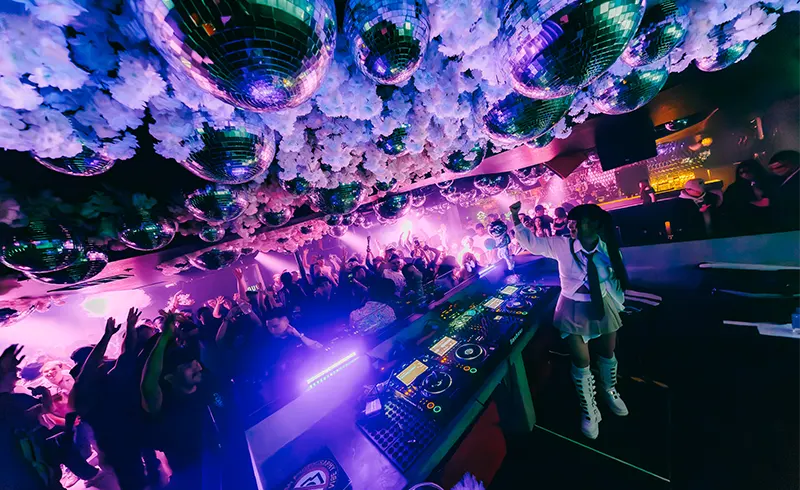
The Commercial Residency vs. the Underground Residency
DJ Mag’s extensive coverage of DJ residencies draws this distinction clearly: a commercial residency is a branding agreement where a famous DJ appears frequently enough to drive ticket sales. An underground residency is an artistic relationship where a DJ becomes the musical voice of a specific room, playing it so frequently and so deeply that they understand it in a way no visiting artist can.
Bauhaus Las Vegas operates on the underground residency model. Its residents are not famous names borrowed for commercial value — they are artists who have committed to the room, learned its acoustics, built relationships with its regular crowd, and developed a musical identity that reflects this specific venue at this specific moment in the city’s underground history.
What Resident DJs Actually Do
- Open events by warming up the room — establishing the sonic character of the night and preparing the crowd for the headliner
- Close events after the headliner — sustaining energy while the crowd winds down and reading the room at its most intimate hour
- Play standalone nights as headliners in their own right — demonstrating that the venue has genuine artistic depth beyond visiting names
- Represent the venue's identity to the broader community — their music taste and DJ style communicate what the venue stands for
- Develop the next generation — residents at Bauhaus often introduce and support emerging local artists, extending the scene's depth
The Bauhaus resident DJs page documents the specific artists who hold this role and what each brings to the venue’s musical identity.
The Resident's Relationship With the Room
- Understanding the acoustics — where the bass sits, how the stereo image spreads, how different frequency ranges behave at different volumes
- Knowing the crowd — which regulars are on the floor on a given night, what energy those people are bringing, what kind of musical journey they're ready for
- Feeling the venue's temperature across the full night — what the room needs at midnight vs. what it needs at 4am
- Building a relationship with the Danley system specifically — knowing how to use its capabilities rather than simply play through it
Boiler Room has live-streamed thousands of DJ sets globally, and the difference between a DJ playing a room they know deeply and one playing it for the first time is audible. Residents consistently demonstrate a fluency with their rooms that visiting artists — however talented — can’t replicate.
How Residents Define Venue Identity
Read about what is a DJ residency in the Las Vegas context for a broader view of how residencies work across the spectrum from commercial to underground.
The Best Residencies vs. The Worst
Resident Advisor’s annual coverage of residencies consistently distinguishes between residencies that add genuine value to a venue’s culture and those that are purely commercial arrangements. The distinguishing factors are always the same: how much creative input does the resident have? How frequently do they play? How deeply are they connected to the community the venue serves?
Check the best DJ residencies in Las Vegas right now for context on how the landscape looks across the city.
Experience what resident DJs at their best sound like — book your next Bauhaus night here.